
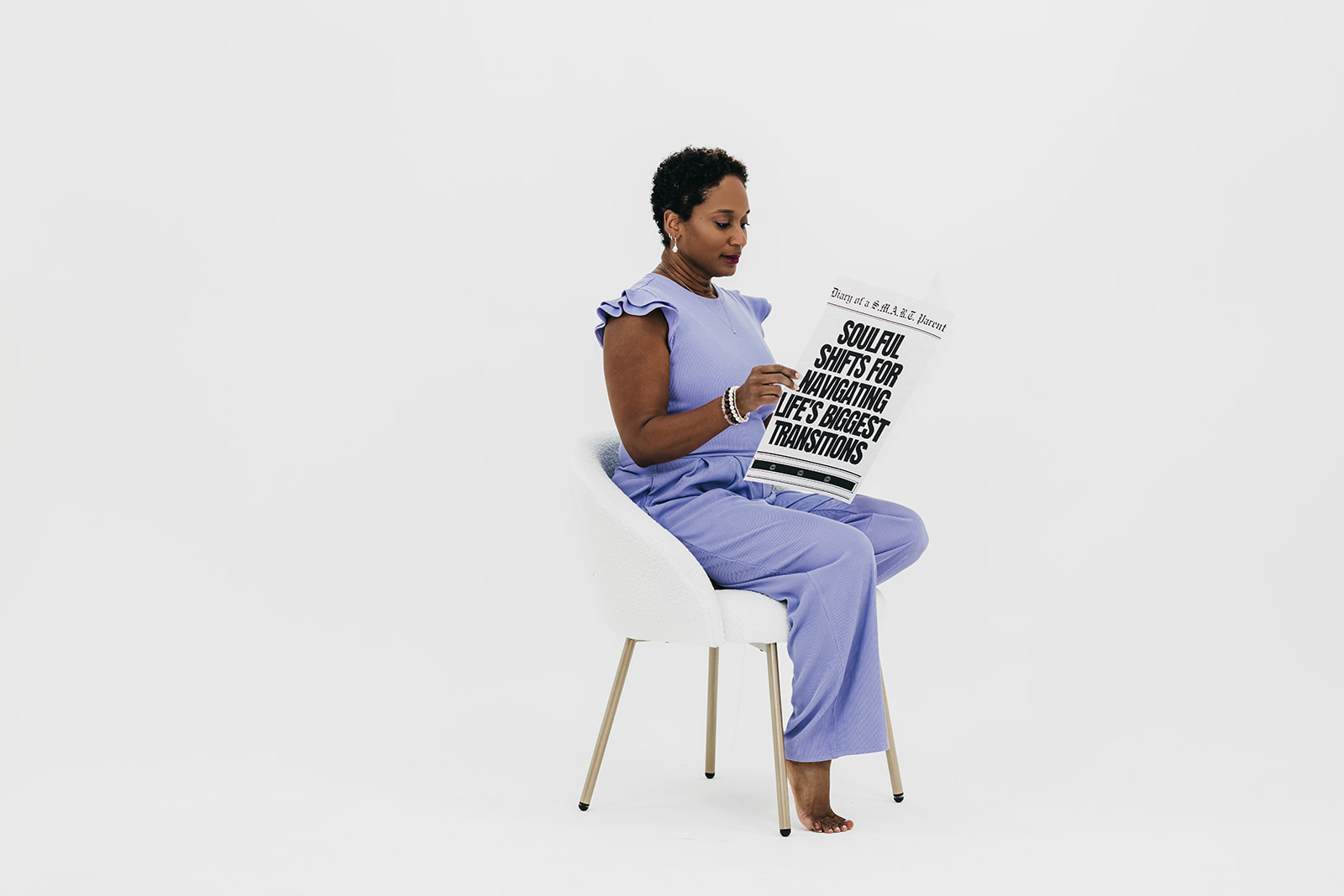
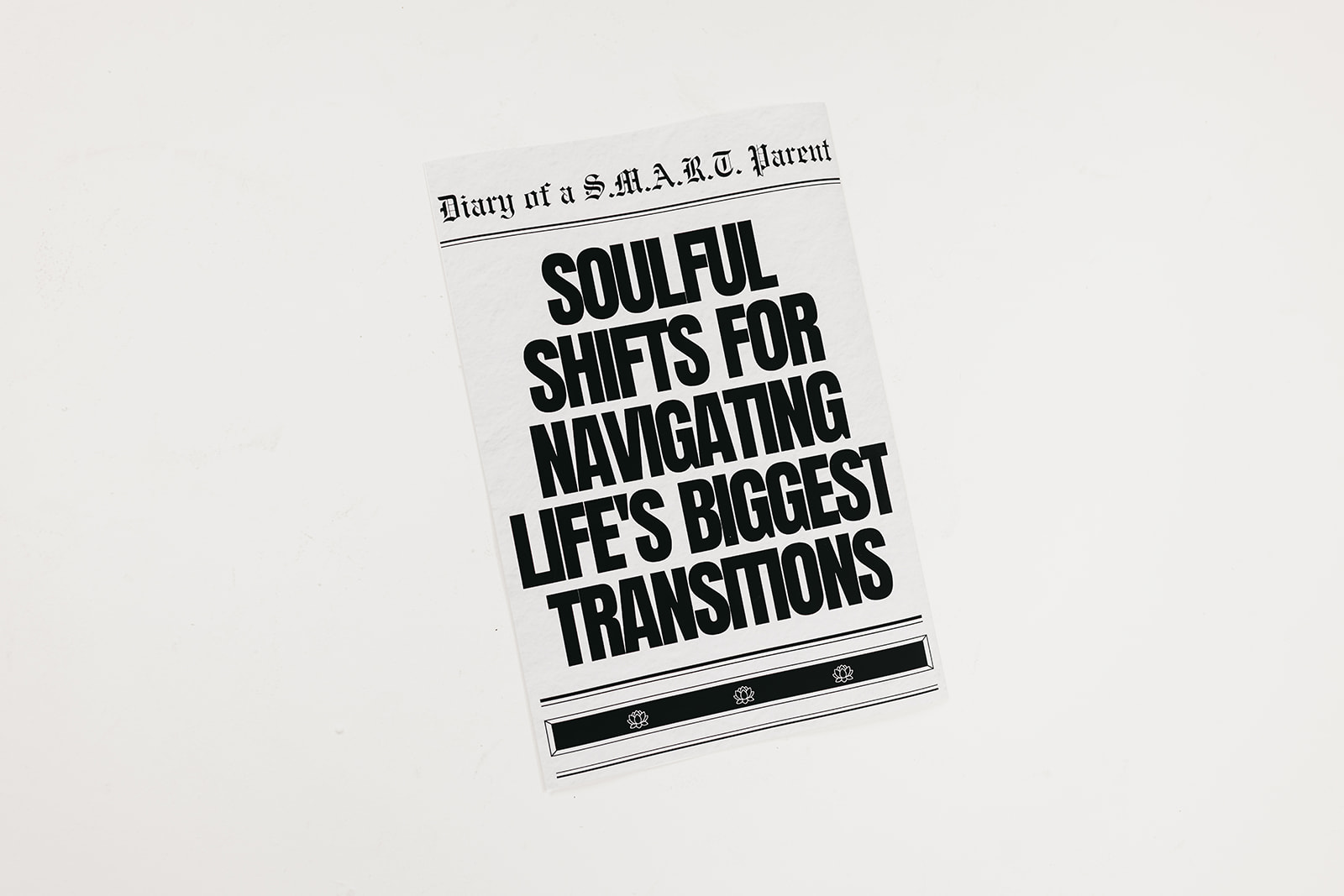
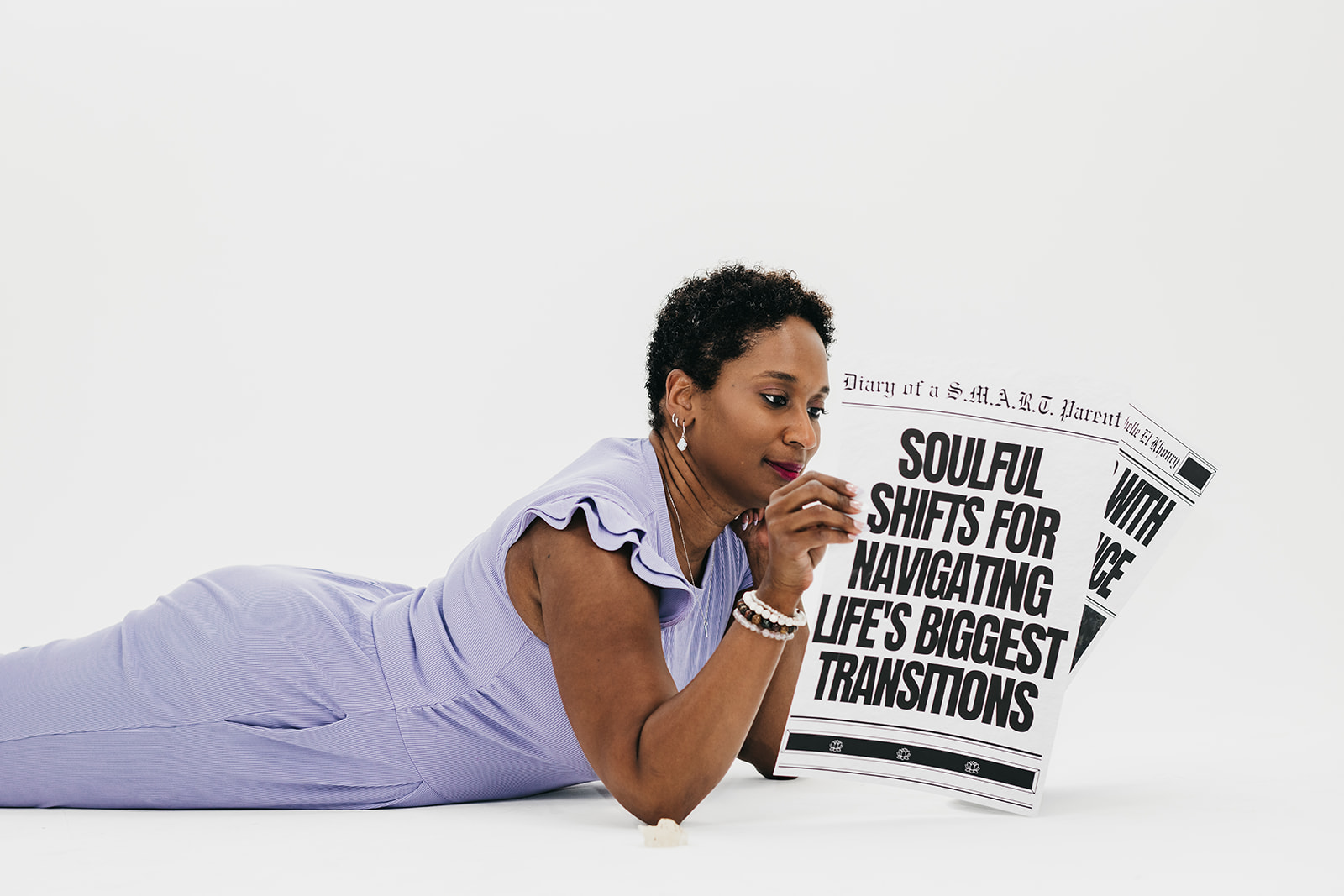
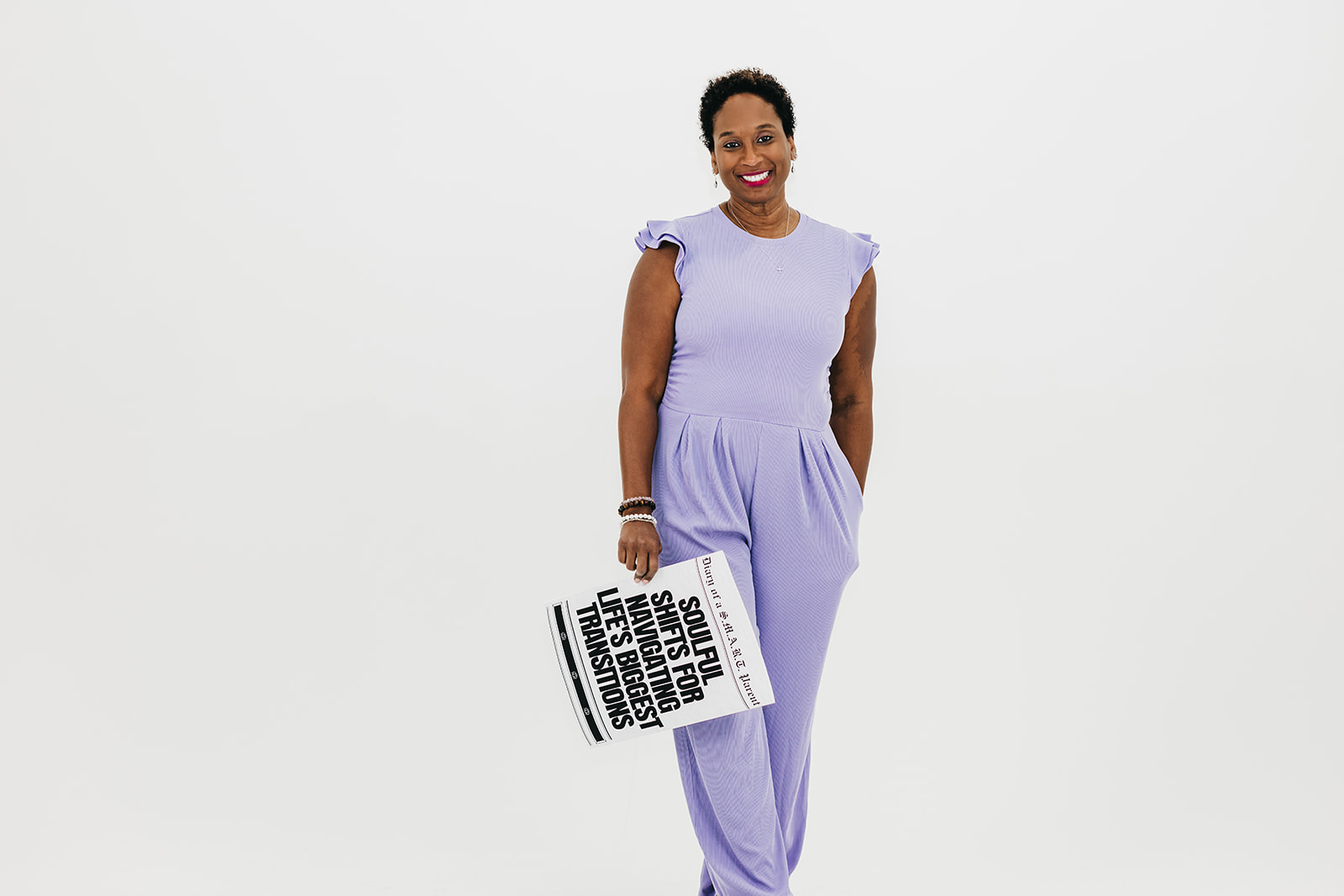

Let yourself be witnessed
Dear leader,
Stop performing competence when you're carrying grief alone.
You see a professional woman who shows up, delivers results, maintains her composure. Someone who returned to work after a major health diagnosis, a devastating loss, or a life-altering transition and kept all her meetings, answered all her emails, because "people are counting on you”.
But what others don't see is the isolation of carrying profound loss in complete silence, the exhaustion of performing "fine" when everything inside feels shattered, and the slow disappearance of the person you were before.
You've now moved through four pillars of The S.M.A.R.T. Journey to Parenting™: You've set your vision, prepared mindfully, advanced your understanding, and risen with redefined strength.
Now we enter the final pillar: Thrive Together, where we acknowledge a fundamental truth—you cannot sustain any of these practices in isolation. These transformations become sustainable by breaking your silence, maintaining bonds through chaos, and modeling emotional presence.
And it starts here, with the hardest shift of all: letting yourself be witnessed.
This past year, I've supported two women through pregnancy loss. One was her fourth loss in recent years. The other, her first. Both needed someone who could witness their grief without trying to fix it. What I learned from supporting them showed me how different loss experiences require the same fundamental thing: being seen.
With a first loss, you face the shock of your body doing something you never imagined, the confusion about whether to tell people who knew you were pregnant, the medical procedures that feel clinical when the experience is so emotionally raw. You don't need statistics about how common miscarriage is or platitudes about trying again. You need space to be seen in your pain. With a fourth loss, the isolation compounds. We're taught that repeated loss means you should somehow be more prepared, that resilience means compartmentalizing and moving forward. But there's no timeline for grief. A fourth loss doesn't hurt any less than the first, sometimes it hurts more because you're also grieving what didn't work before.
There's a 10-year gap between my first and second daughters. When people comment, I now respond honestly: "Yes, I lost a couple babies in between". It still hurts because what no one realizes is that those losses came after years of navigating a divorce, being a single mom to my first daughter, starting a new relationship, and questioning whether I was meant to be a mother again. The losses weren't isolated events, they were compounded by the uncertainty of whether that chapter of my life was even supposed to happen.
For over a decade, I carried that grief without speaking it—even to my partner, who didn't realize the depth of my pain until marriage counseling years later. That's what silence costs: it prevents even our closest relationships from supporting us. When we don't witness our own grief out loud, others can't witness it either.
Speaking that truth now breaks the silence for someone else who needs to hear they're not alone.
Recent research shows that 50% of working mothers experience postpartum mental health challenges, yet only 35% feel safe discussing family needs with their managers or HR. When 69% don't feel emotionally ready to return to work but only 22% receive structured reentry plans, we see the pattern clearly: the system assumes you're fine when you don't say anything. (Executive Moms Report on The Future of Working Motherhood, 2026).
But this isn't about individual weakness. It's about a culture that teaches professional women to compartmentalize grief, hide struggles, and maintain the appearance that "everything's fine" even when it's not.
You cannot thrive in isolation.
Being witnessed isn't about oversharing with everyone. It's about strategically choosing safe people who can hold space for your experience without trying to fix it. It's ending the isolation that makes normal struggles feel like personal failures.
For women especially, this requires disrupting the conditioning that says competence means composure. You've been taught that visible struggle equals incompetence. But you can't access workplace support—mental health benefits, flexible arrangements, recovery time—if no one knows you need it.
This applies beyond pregnancy loss. Postpartum depression navigated alone. Career sacrifices made invisibly. The overwhelm of trying to be everything to everyone. Any struggle you've been taught to hide rather than share.
Here are three ways you can break the silence:
Choose one safe person. Not everyone deserves access to your vulnerability. Identify one person—a therapist, trusted colleague, close friend—who won't minimize your experience or rush your healing. Someone who can sit with your pain without trying to solve it.
Speak one truth out loud. Start with yourself first, then with someone else. It doesn't have to be your complete story. Just one honest sentence: "I'm not okay right now" or "This is harder than I expected". Truth-telling breaks isolation more effectively than perfect explanations.
Practice selective workplace disclosure. You don't owe everyone your story, but having 1-2 trusted people at work who know what you're navigating provides crucial support when you need flexibility. Try: "I'm processing something difficult. Here's what support would look like" or "I may need more time than usual while I navigate a personal situation".
Breaking isolation isn't weakness. Vulnerability isn't oversharing. And being witnessed in your struggle isn't seeking attention—it's allowing the support that makes healing possible.
But breaking the silence is just the beginning. Once you've allowed yourself to be witnessed, the next challenge is actively maintaining your most important relationships through overwhelming change. In my next entry, we'll explore how to maintain your bonds and keep your relationships alive during chaos—because connection isn't automatic. It requires intention, especially when you're exhausted and everything is changing.
Your struggle matters regardless of how it compares to others' experiences. Grief doesn't follow deadlines. You can hold both grief and hope simultaneously. And sharing your story is your choice, but when you're ready, it can be profoundly healing.
From my desk to yours,
Dr. Michelle El Khoury
P.S. If this entry resonates, read my blog post "When Your Body Feels Like a Stranger: Navigating Pregnancy Loss" for more on the physical journey of loss alongside the emotional one.